
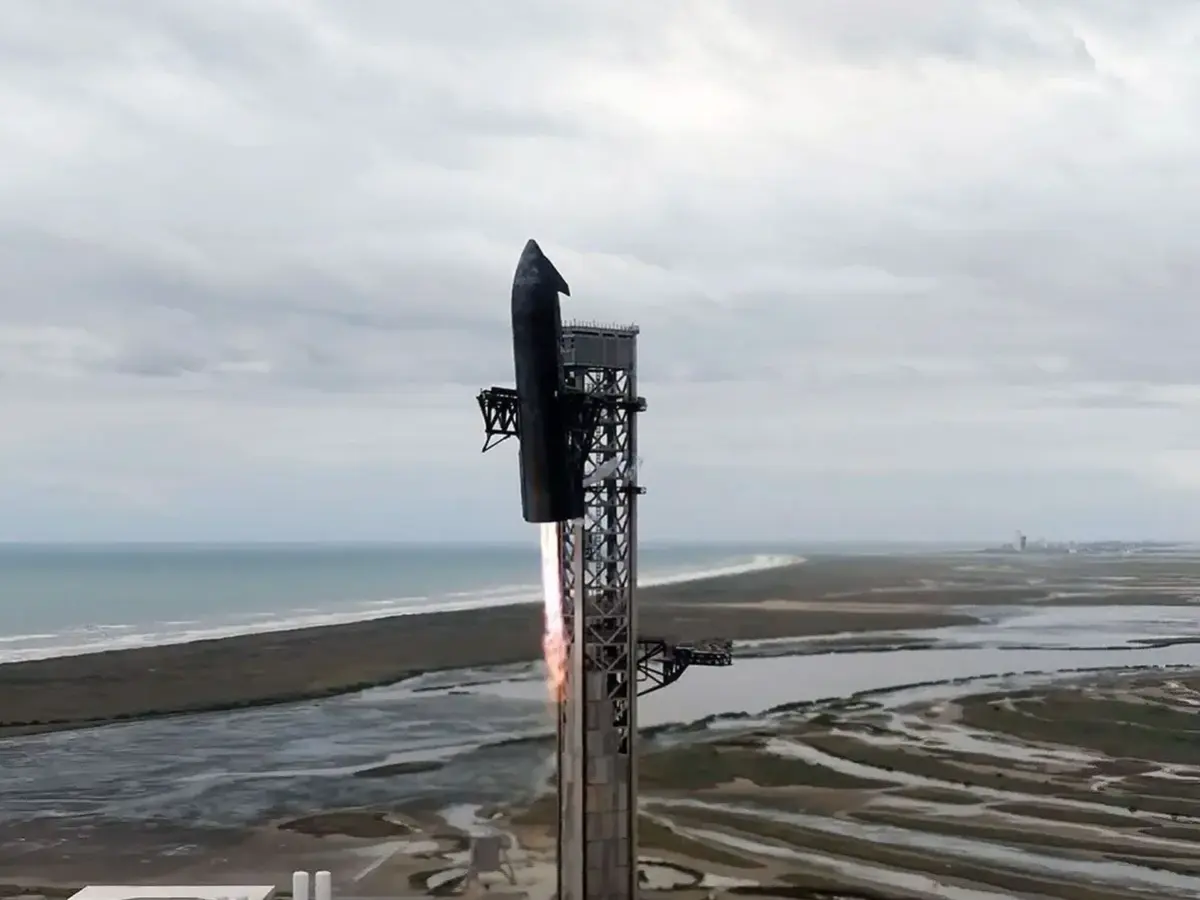
In a breathtaking display of precision engineering that felt more like science fiction than reality, SpaceX successfully caught the upper stage of its massive Starship rocket using the towering mechanical arms known as chopsticks. The event unfolded on November 14 at the company’s Starbase facility in South Texas, where Ship 42 descended through the clouds and nestled perfectly into the grip of the Mechazilla launch tower. While the mission began on Friday with hopes of recovering both stages of the vehicle, a low fuel alarm forced the Super Heavy booster to divert to a splashdown in the Gulf of Mexico, leaving all eyes on whether the ship itself could pull off the impossible.
The atmosphere during the livestream was electric, punctuated by a soundtrack of Baby Come Back as the vessel slotted into place at 4:20 p.m. Eastern Time. For SpaceX, this wasn’t just another successful test; it was a fundamental shift in how humanity accesses space. Because the upper stage travels much further and faster than the booster, catching it represents a significantly harder technical challenge. Company representatives described the moment as the holy grail of spaceflight, noting that snatching a vehicle returning from orbit out of mid air effectively removes the final hurdle for complete rocket reuse.
Beyond the spectacle of the landing, Flight 15 served several critical strategic purposes. The ship successfully reached orbit and deployed another batch of next generation Starlink V3 broadband satellites, continuing Elon Musk’s ambitious plan to blanket Earth in high speed connectivity. To ensure today’s landing was viable, SpaceX used orbiting satellites to capture imagery of Ship 42’s heat shield during reentry, confirming it was intact enough to survive the plunge back toward Texas.
This breakthrough paves any future path for an even more aggressive expansion into low Earth orbit, including proposed AI data center constellations consisting of millions of spacecraft. By eliminating the need for traditional landing legs or ocean recoveries, SpaceX can now inspect and refurbish their rockets almost immediately upon return. With this missing link finally secured, the company is expected to attempt similar maneuvers in upcoming flights, accelerating a cadence that could fundamentally change orbital logistics forever.